
Frozen vegetable procurement
Buying Frozen Peas, Beans and Mixed Vegetables from India
Make competing quotations comparable: define the vegetable, cut or recipe first, then agree the sample, pack and delivery requirements for your business.
Choose the product for its intended use
A catering distributor, retail private-label buyer and ready-meal manufacturer may need different products even when each asks for frozen vegetables. Start your brief with the intended dish or application, whether you will repack or process the product, and the country where it will be sold.
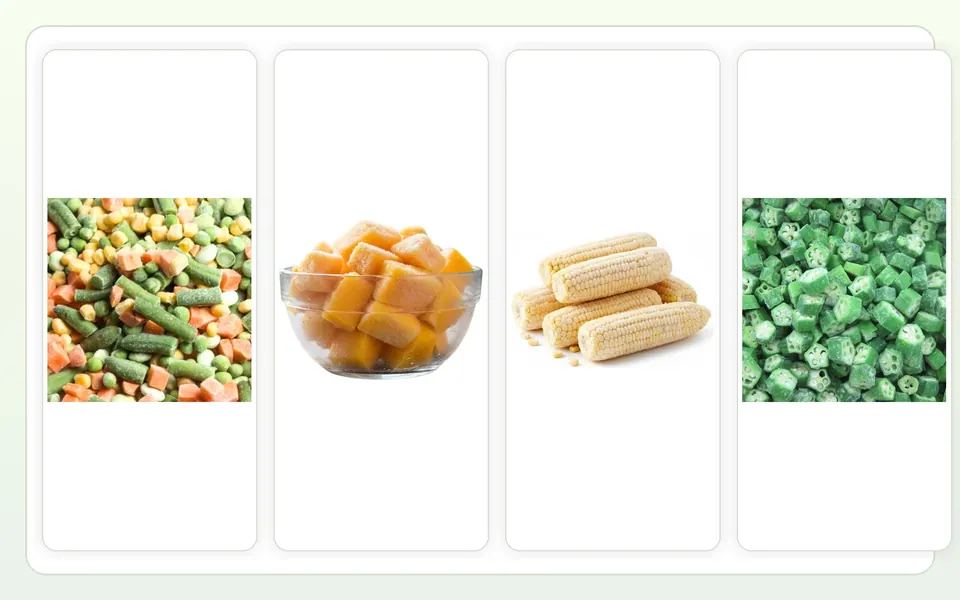
Our listed range includes peas and beans, okra and cauliflower, and mixed vegetables. Discuss additional cuts or custom recipes with the export desk. A catalogue grouping is a starting point for an enquiry; write a separate specification for each proposed item.
Specify peas and beans separately
Codex CXS 320-2015 has separate annexes for peas and green or wax beans, including presentation and quality provisions. Use the appropriate product reference when agreeing a specification, rather than treating every frozen vegetable as the same grade.
- Peas: state the product identity, size preference, colour and texture acceptance, and intended preparation. Ask how size or grade will be measured.
- Beans: identify the actual bean, whole or cut presentation, cut dimensions and permitted variation. Provide a sample or drawing if the cut matters to your production line.
- For both: agree how broken material, visible defects and foreign material are assessed in the approved sample and subsequent lots.
References: Codex: Standard for Quick-Frozen Vegetables, CXS 320-2015
Write a mixed-vegetable recipe that can be reproduced
List every vegetable and its target proportion by weight. Decide whether the proportions apply to the complete pack or a defined test portion, and agree a sampling method. Include each component’s cut size and the substitutions that require your written approval.
A useful enquiry identifies the recipe owner, whether mixing occurs before dispatch or after import, and the end application. For private label, confirm who approves recipe changes and updates the ingredient declaration. Do not leave “mixed vegetables” as the entire purchase specification.
- Recipe: named ingredients, proportions and any added ingredients.
- Presentation: cut dimensions and the expected distribution of components.
- Acceptance: agreed sample, preparation method and review of any variation.
Confirm preparation instructions, not just IQF presentation
Codex describes free-flowing IQF units as separable in the frozen state. Ask the supplier to demonstrate the presentation needed for portioning, rather than assuming a photograph proves it.
EFSA’s 2020 assessment of blanched frozen vegetables identifies hygiene, process controls, environmental monitoring and accurate preparation instructions as relevant to Listeria risk. Free-flowing presentation does not answer whether a product is suitable for uncooked use.
Tell the technical team how the vegetables will be used. Request the selected product’s preparation instructions and supporting process and microbiological evidence. Agree any cooking or further-processing requirement before pack artwork is approved; this guide supplies no universal cooking schedule.
References: Codex: Standard for Quick-Frozen Vegetables, CXS 320-2015; EFSA: Listeria in frozen vegetables—how to reduce risks
Match retail, food-service and bulk packs to the receiving operation
CBI’s October 2024 European market study distinguishes retail, food-service and food-processing channels and describes specialist importers and wholesalers as an important route to buyers. Treat that as channel context, not evidence that any named company is our customer.
For your quotation, state the inner-pack net weight, case configuration, pallet arrangement and available receiving equipment. Compare delivered usable quantity, not just a price per outer carton. For private label, provide the intended sales country, artwork language, brand and approval contact.
Ask the importer and supplier to agree the actual label, lot identification, storage and preparation information. Keep the approved artwork and packing specification with the order so a later reprint does not silently change the product.
References: CBI: Entering the European market for frozen vegetables
Agree cold-chain records and arrival acceptance
Codex defines quick-frozen vegetables using a cold chain at −18°C or colder, subject to permitted tolerances. Its scope excludes products indicated for further industrial processing; confirm the applicable product standard and destination rules for your actual use. This reference is not a validated shelf-life or transport specification for our supply.
In the quotation, agree loading and receiving responsibilities, monitoring records, delivery point and the process for handling a temperature excursion. Request the selected supplier’s validated storage conditions and shelf life for the proposed product and pack.
Define an arrival inspection: who samples the goods, what records are reviewed, how product condition is assessed and when discrepancies must be reported. Keep a commercial claims procedure separate from food-safety disposition decisions.
References: Codex: Standard for Quick-Frozen Vegetables, CXS 320-2015
New Zealand: prepare a frozen-product import brief
For New Zealand enquiries, have the importer review MPI’s Stored Plant Products standard against the actual vegetable species, recipe and processing. Its commercially produced frozen-produce provisions differ from fresh-produce rules; they do not establish approval for our company or a particular consignment.
Check the complete frozen-produce clause, its exceptions and the definitions before shipping. The standard distinguishes fruit-fly host status in its freezing requirements. Ask the supplier for process and temperature records rather than treating an IQF description as evidence.
Fresh Indian grape access follows a separate pathway; these frozen-food provisions do not confirm it.
- Identify every species, including components with seeds, against MPI’s Plants Biosecurity Index and the clause’s exclusions.
- Confirm commercial processing, sealed packaging, labelling, product identity and shipment documents.
- Arrange a registered New Zealand food importer and review food safety, labelling, Customs and container requirements separately.
- Agree who reviews process records and obtains any clarification from MPI before dispatch.
References: MPI: Stored Plant Products for Human Consumption, SPP.HUMAN.IHS; MPI: Processed foods from plants—importing
Send a brief the export team can quote
Send the vegetable identity or recipe, quantity and unit, pack, destination and shipment window together. Add the sample acceptance criteria and any retailer or manufacturing requirements. Request a current datasheet and relevant lot, site and traceability documents for the supply being proposed.
India’s historical exports of frozen peas, beans and mixtures are recorded in different commodity categories. Those statistics do not establish your exact recipe, supplier approval or shipment eligibility. The export desk and importer should review the actual product and destination before an order is accepted.
Procurement checklist
Frozen vegetable quotation checklist
- Product identity and intended use: retail, catering, repacking or further manufacture.
- Pea grade or bean presentation, dimensions and agreed tolerances.
- For mixtures: each ingredient, proportion and substitution-approval process.
- Approved sample, preparation method and lot acceptance criteria.
- Inner-pack weight, case configuration, pallet plan and private-label artwork.
- Quantity and unit, destination, delivery point and shipment window.
- Supplier datasheet, applicable site/lot evidence and required tests.
- Validated storage and shelf life, temperature records and arrival inspection responsibilities.
Common questions
Buyer FAQ
Does IQF mean frozen vegetables are ready to eat?
No. IQF presentation does not establish suitability for uncooked use. Confirm the actual product’s intended use, process evidence and preparation instructions with the supplier and importer.
Can I request a private-label vegetable mix?
Yes, send the proposed vegetables, proportions, cuts, quantity, pack and sales country for review. Recipe, processing feasibility, artwork, availability and commercial terms must be agreed for the actual request.
What minimum order and pack weights apply?
Request a quotation for the specific vegetable, recipe and destination. No fixed vegetable MOQ or pack weight is established by this guide; the one-container terms stated for grapes and mango pulp should not be transferred to vegetables.
Can the same specification be used for every country?
Use one controlled product specification as a starting point, then have the importer review destination rules, label language, intended use and any buyer-specific requirements. A past export statistic or a certificate for another site does not approve the proposed shipment.
Sources and verification
Consult the official source for current requirements. Shipment eligibility and product specifications must be confirmed for the actual origin, destination and supply arrangement.
- MPI: Stored Plant Products for Human Consumption, SPP.HUMAN.IHS
9 April 2025 edition; full official PDF retrieved 13 November 2026. Read clause 5.5.9 with Parts 1–3 and Appendix 1. Biosecurity requirements do not replace food-safety obligations.
- MPI: Processed foods from plants—importing
Reviewed 13 November 2026. Importer, food-safety, Customs, packaging and container steps are separate from commodity-specific biosecurity provisions.
- Codex: Standard for Quick-Frozen Vegetables, CXS 320-2015
FAO/WHO text amended 2022. Official 49-page PDF downloaded and reviewed 12 November 2026; green/wax bean annex page 39 and pea annex page 43. General description and scope are reference context, not company compliance or import authorisation.
- Codex: official CCPFV standards table
Alternative download route, checked 12 November 2026: find CXS 320-2015, Standard for Quick Frozen Vegetables, and select the English download. The table lists last modification as 2022.
- EFSA: Listeria in frozen vegetables—how to reduce risks
Published 20 April 2020; reviewed 12 November 2026. Scoped to the assessment of blanched frozen vegetables; not a product-specific process validation.
- CBI: Entering the European market for frozen vegetables
Updated 11 October 2024; reviewed 12 November 2026. Channel context only. Historical border-control rates and older regulatory references are not used as current requirements.