
Importer guide
Pomegranate Arils: Packaging and Cold-Chain Guide
How to choose a pomegranate-aril format, define the cold-chain brief, and request the right information before an export quotation.
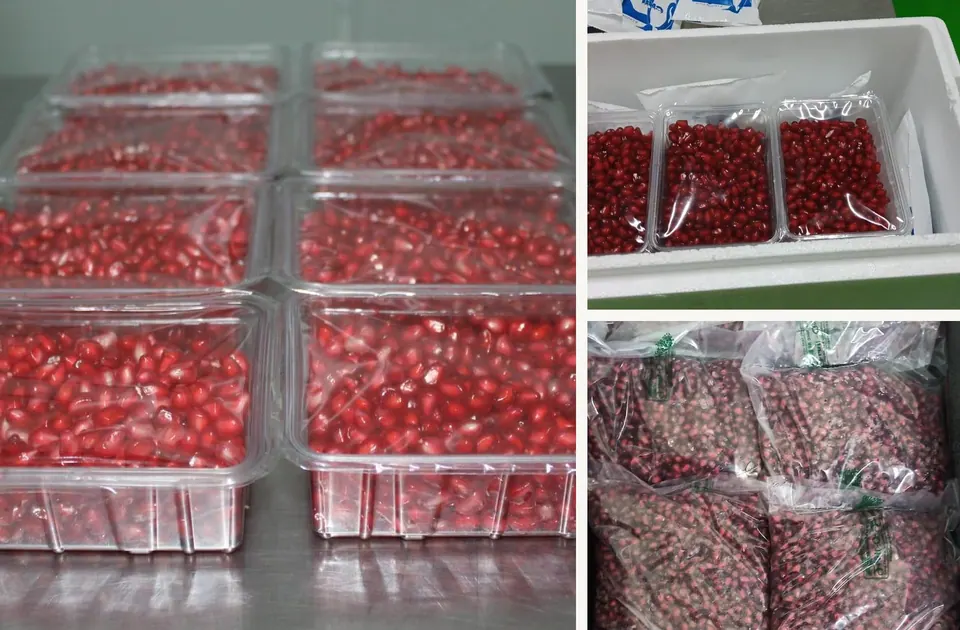
Start with the intended sales channel
The best pack is determined by where the arils will be used. Retail programs generally prioritise appearance, portion size, label area, and shelf presentation. Food-service buyers may prefer larger sealed trays or cups, while processors often prioritise efficient bulk handling.
Before discussing a quotation, define whether the product is intended for retail shelves, airline catering, hotels and restaurants, food-service distribution, or further processing. This prevents a visually attractive pack from being selected for the wrong operating environment.
Compare MAP cups, trays, and vacuum formats
Modified-atmosphere packaging (MAP) is commonly considered for fresh retail and food-service arils because it supports controlled presentation and handling. Cup and tray dimensions, fill weight, sealing film, gas mix, and label layout must be aligned with the requested shelf-life and destination route.
Vacuum packs appear in the catalogue as a format to discuss. Confirm presentation, texture, intended use, safety and handling under the validated packing process before selecting them. A pack name alone does not establish suitability for a retail or processing application.
- MAP cups: portioned presentation for retail or catering
- MAP trays: broader display area and flexible fill weights
- Vacuum packs: presentation and intended use to validate
- Thermal boxes: protective outer dispatch for sensitive movements
Build the cold chain around the route
Fresh arils are time- and temperature-sensitive. The cold-chain plan should cover processing, packing, pre-dispatch holding, airport or port handover, transit, customs exposure, and final delivery. A target temperature without a route plan is incomplete.
Importers should share the destination, transit mode, expected clearance time, final-mile arrangement, and required delivery window. These details allow the packing and dispatch format to be assessed against the actual journey.
Treat shelf life as a tested program outcome
Shelf life depends on raw-material condition, hygiene, processing controls, pack format, temperature stability, transit time, and the buyer's acceptance criteria. It should be confirmed against the exact product, pack, and route rather than treated as a universal number.
A sound buying process agrees the sampling method, microbiological and quality parameters, production date coding, arrival checks, and the point at which shelf life is measured.
Distinguish fresh-cut food safety from whole-fruit sourcing
FDA's August 2026 final guidance addresses biological hazards in ready-to-eat fresh-cut produce and describes its specific processing-facility scope. For a fresh-aril programme, establish the intended use and actual processing model, then ask qualified personnel which requirements apply. The guidance is not certification of Jayshree or a supplying facility.
Request lot traceability, the supplier's food-safety documentation, an agreed sampling and acceptance plan, and evidence for the stated shelf life and handling conditions. Keep these records linked to the actual product and pack rather than relying on a generic certificate logo.
References: FDA: ready-to-eat fresh-cut produce guidance, August 2026
Evaluate MAP or vacuum packing as a validated system
MAP and vacuum packaging must be assessed as part of a validated product-and-storage system, not as a substitute for hygiene and safety controls. FSA guidance addresses hazards in chilled reduced-oxygen packs; its scope and the destination's requirements must be checked for the actual product.
References: FSA: chilled vacuum and MAP guidance
Procurement checklist
Information to include in an arils enquiry
- Destination country and delivery point
- Retail, food-service, catering, or processing use
- Preferred cup, tray, or bulk format and target fill weight
- Expected order volume and shipment frequency
- Required delivery window and transport mode
- Label language, private-label, and carton-marking requirements
- Requested shelf-life target and quality specifications
- Required certifications, tests, and destination documents
- Intended ready-to-eat or further-processing use and current lot/facility evidence
Common questions
Buyer FAQ
What is MAP packaging for pomegranate arils?
MAP means modified-atmosphere packaging. The atmosphere inside a sealed cup or tray is managed to support product quality during the intended chilled shelf life. The gas mix, film, fill weight, and route must be validated together.
Are pomegranate arils available in bulk packs?
Bulk and food-service formats can be reviewed alongside retail cups and trays. The appropriate format depends on the intended use, pack weight, destination, handling method, and cold-chain plan.
What should an importer specify before requesting a quote?
Share the destination, intended use, pack type and weight, expected volume, delivery window, label needs, shelf-life target, tests, certifications, and required documents.
Sources and verification
Consult the official source for current requirements. Shipment eligibility and product specifications must be confirmed for the actual origin, destination and supply arrangement.
- FDA: ready-to-eat fresh-cut produce guidance, August 2026
Checked 13 October 2026. Final US guidance with a defined facility/product scope; not a supplier approval.
- FSA: chilled vacuum and MAP guidance
Checked 13 October 2026. Published scope: England, Northern Ireland and Wales. Review local applicability separately.